
How Denmark is Waking Up to the Challenge of Digital Sovereignty
Society’s institutions and our everyday lives have, for a long time (and increasingly) been transforming from physical to digital, where services, interactions, and communication now transcend the two worlds, which are becoming ever more integrated. Interestingly (and unfortunately), public policy and leadership have not kept pace, which, in the long term, poses a threat to security and, by extension, democracy. Some, however, have started to wake up due to the alarm bells that are going off with increasing frequency. One of the newly awakened is Denmark, where the question of digital sovereignty (or strategic autonomy) has become present at the top of mind among both politicians and citizens.
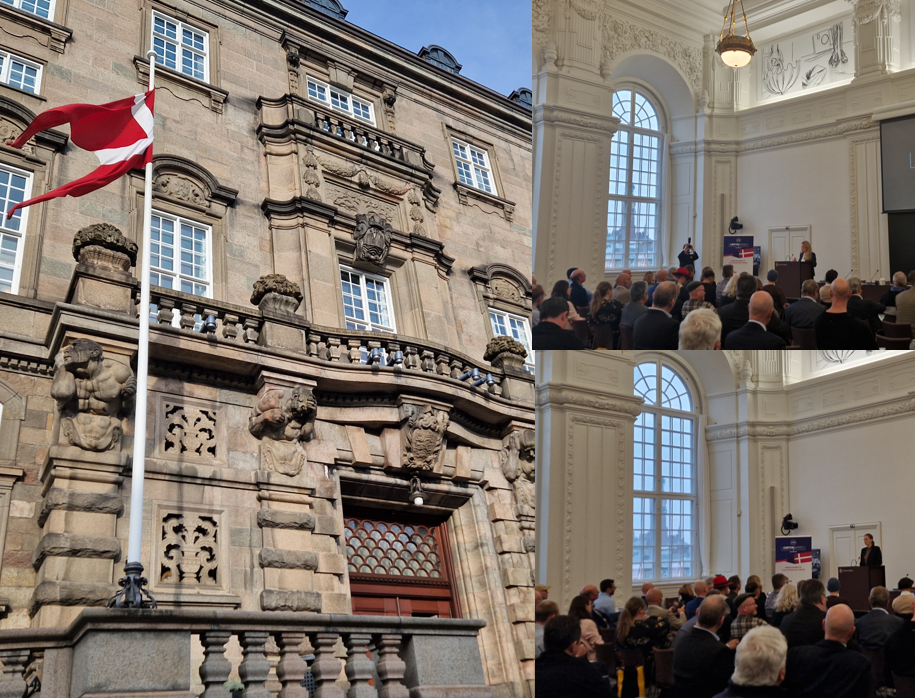
This shift became very evident recently, when I attended half a day of discussions at Folketinget (house of the Danish Parlament) featuring politicians, civil servants, industry representatives, and members of the wider open source ecosystem across different levels of government in Denmark. The day reflected a growing recognition that yesterday’s digital dependencies have become today’s security risks—affecting both national infrastructure and everyday life. This sense of urgency was evident across the political spectrum, suggesting a shared understanding of the need for change.
Reclaiming Technological Ownership
Lisbeth Bech-Nielsen (SF) emphasised that the dominance of large technology companies lies in their global reach, reinforcing dependencies that open source technologies can help dismantle. She linked open source not only to technical innovation but to democratic co-ownership of technology by states and citizens alike—especially in what she described as a country often called “Microsoft land”. For Nilsen, open source embodies freedom of choice, transparency, and responsibility: digital infrastructure must be viewed as a public good that requires intentional maintenance and investment. Denmark, she argued, is ready to partner across Europe to make open technologies central to digital sovereignty.
A European Awakening
Caroline Stage Olsen, Denmark’s Minister of Digitalisation, noted that open source has gained notable traction over the past year, reflecting over a broader European shifts in digital strategy. She warned that Europe cannot afford to “fall asleep behind the digital steering wheel”, referencing Mario Draghi and President Donald Trump as reminders that global realities evolve faster than Europe’s software can update. Olsen urged action to strengthen digital sovereignty and build a resilient European industry, underpinned by values-based technological infrastructure.
Olsen emphasised the need to strengthen digital sovereignty and build a stronger European industry and market rooted in values-based infrastructure. Drawing on the symbolic setting of Landstingssalen, the former upper chamber of the Danish Parliament once dominated by aristocrats, she illustrated how institutions can evolve. Denmark and Europe must now once again evolve its institutions, in an era where these co-exist in both a physical and digital form, and artistocrats dominate through control over infrastructure and data, rather than land and labour.
Open source provides a tool to help the evolution, and should not be viewed through polarized debates of “for” or “against,” but through practical questions of “how” and “when” adoption works. Citing pilot projects within her own ministry, Olsen highlighted growing interest in open source alternatives and anticipated more practical experiments in the coming years. Denmark, she noted, has already dedicated some funding to this agenda, but broader European coordination is essential. For Olsen, increasing sovereignty is not about rejecting big tech entirely, but about ensuring Europe has the freedom and capability to leave outdated dependencies behind, and regain values of freedom, transparency, and democracy.
Building Sovereignty Through Collaboration
Panel discussions throughout the day explored how control and power are distributed in digital systems, emphasising that technology is never neutral. True sovereignty, participants argued, depends on designing systems that are connected and balanced—avoiding both isolation and concentration of power. Achieving this balance means empowering citizens and governments through transparent, open, and accountable infrastructures.
Data sovereignty, described as the “new oil”, was a recurring theme. Control over data pipelines, their infrastructure, and their physical location defines independence in the digital age. To this end, speakers called for open standards across the entire technology stack and urged that procurement practices reflect these principles. Regulatory efforts, they emphasised, must strengthen resilience without simply replacing one dependency with another. Such efforts should be coordinated across Europe to prevent market fragmentation and to reinforce collective strength.
Institutional Backing with OSPOs as Catalysts
Speakers also underlined the importance of creating robust support structures to enable sustained open source adoption across the public sector. Denmark’s long tradition of public collaboration offers a solid starting point, but stronger political leadership is needed to set direction and promote cultural change. Existing bodies such as Statens IT and OS2 were referenced as partial models: the former fulfils client-driven requests but lacks strategic mandate, while the latter effectively functions as an Open Source Programme Office (OSPO) for municipalities—showing the benefits of decentralised coordination, but also exposing the need for national structures.
The panellists advocated for a distributed network of OSPOs across different levels of government to act as collaboration hubs between ministries, agencies, and technology partners. These offices could align strategies, provide technical and legal support, and strengthen cross-sector partnerships. To succeed, such frameworks must be accompanied by political commitment that generates demand and clearly defines strategic priorities. Vendors, in turn, remain vital contributors for support and maintenance, but public institutions need the courage and autonomy to innovate openly.
Turning Supply Into Demand
In the closing discussions, panellists agreed that while Europe possesses a rich open source supply base, demand remains weak and uneven. Without coordinated action, even strong supply ecosystems cannot reach sufficient scale. Political hesitancy and institutional inertia were seen as major obstacles, as many decision-makers are waiting for formal OSPO structures to materialise before committing to open source procurement. One contributor stressed the importance of moving ahead now—citing examples from northern Europe where public institutions already procure open source solutions at scale.
Speakers from unions and industry highlighted Europe’s highly educated workforce and growing technical expertise but warned that recent reductions in STEM education risk eroding future capacity. The need for stronger leadership was clear: leaders must step outside their comfort zones, make bold decisions, and recognise that the cost of inaction is rising. Open source communities, meanwhile, called for sustained investment in upstream contributions and shared platforms, to prevent duplication across the public sector. Open source, they concluded, is not merely a procurement model—it is an innovation model built on openness, participation, and trust.
From Ambition to Action
An apparent and clear message from the day is that Europe has the talent, infrastructure, and policy ambition to realise digital sovereignty. What remains is to turn this potential into action by creating tangible demand, strengthening partnerships across sectors, and ensuring that political will translates into sustained investment and shared ownership. Open source provides a vehicle and tool for building an autonomous and sovereign society, both in the physical and digital.