Digital sovereignty top subject in Canada
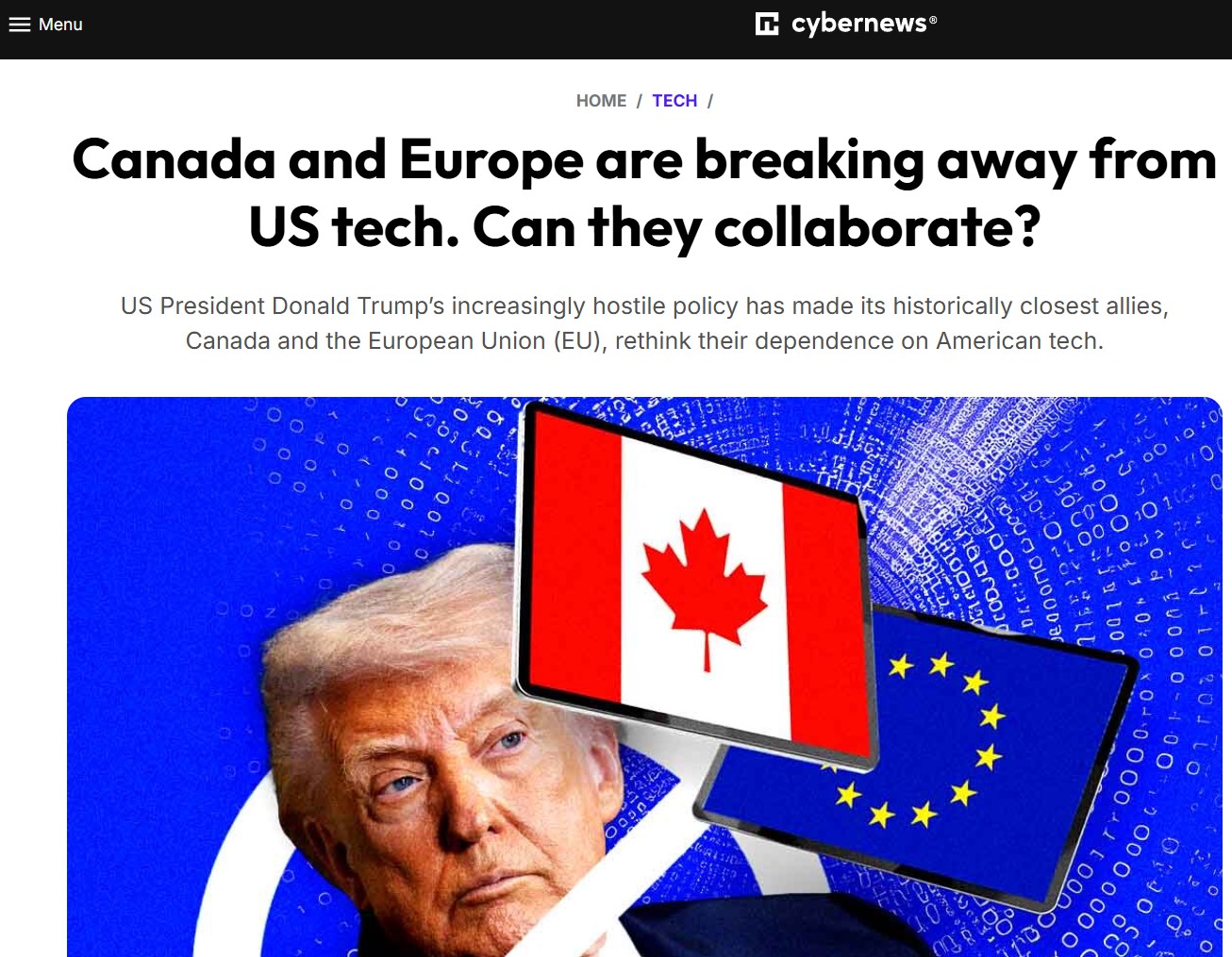
There is increasing interest from Canada into what Europe is doing for growing its digital sovereignty and resiliency. Commented recently in two different media highlighting the many opportunities that reside across software and hardware layers, and how open source can serve as a lever for collaboration wherever there are mutual interests, e.g., in creating alternatives and breaking dependencies in cloud stacks and to standard applications.
The open source model for collaboratively developing and freely (re)sharing solutions is increasingly adopted across governments in Europe. France, Germany and Netherlands have created their own alternatives to leading proprietary office productivity suites based on existing and newly developed building blocks. The collaboration is now expanding across the continent through an EU Digital Infrastructure initiative. Schleswig-Holstein, a state province in northern Germany, has replaced towards 80% of their public sector IT with open source alternatives.
These collaborations are not limited by borders, nor oceans. If there is a mutual interest in collaborating, there is an opportunity for anyone to contribute. This is further emphasised through the EUs talk of Open Strategic Autonomy, which promotes interoperable and open collaboration as means for growing autonomy in strategic areas.